
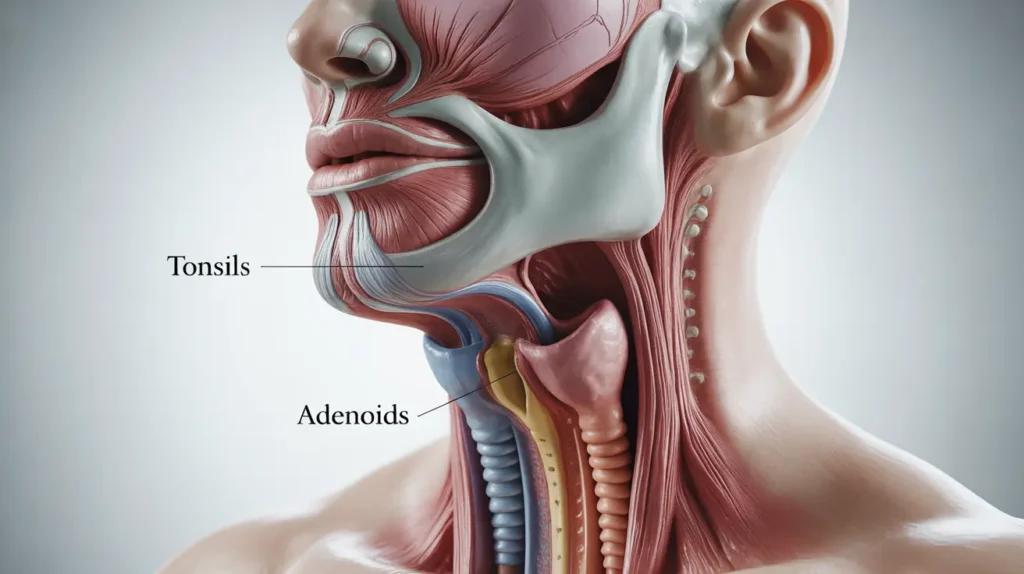
Understanding Tonsils and Adenoids
The tonsils and adenoids are components of the lymphatic system, playing a crucial role in the immune response, particularly in early childhood. Anatomically, the tonsils are two oval-shaped masses located at the back of the throat, one on each side. In contrast, the adenoids, also known as pharyngeal tonsils, are situated higher up, behind the nose and above the roof of the mouth. Both structures comprise lymphoid tissue, which is vital for the body’s defense against pathogens.
These glands serve as frontline defenders against infections. They produce lymphocytes, a type of white blood cell that helps to fight off infections by identifying and combating harmful bacteria and viruses. During childhood, these tissues are particularly active as the body encounters various pathogens for the first time. Consequently, the tonsils and adenoids frequently swell, a condition known as hypertrophy, which can sometimes lead to complications such as obstructive sleep apnea or difficulty swallowing.
Common medical conditions associated with these lymphoid tissues include tonsillitis, characterized by inflammation of the tonsils, often due to viral or bacterial infections, and adenoiditis, which involves the same process in the adenoids. Symptoms of these conditions might include sore throat, difficulty breathing, or chronic ear infections. Recognizing these issues early is essential, as they can indicate larger health challenges when left unaddressed.
While tonsillectomy and adenoidectomy are often discussed as treatment options for recurrent infections or breathing difficulties, understanding the natural roles of these tissues highlights their importance in health and disease. It is imperative for both parents and healthcare providers to be informed about the functions and potential complications associated with the tonsils and adenoids, paving the way for better management of related medical conditions.
Debunking Myths About Tonsils and Adenoids
Throughout history, tonsils and adenoids have been the subject of numerous myths and misconceptions that often cloud public understanding of their roles and significance. One prevalent myth asserts that tonsils are useless organs, remnants from our evolutionary past. In reality, tonsils play a vital role in the immune system, particularly in young children, by helping to fight infections. They produce antibodies and contribute to the immune response, especially during the early years of life when our bodies are still developing defenses against pathogens.
Another common belief is that the removal of tonsils, known as tonsillectomy, results in a weakened immune system. While it is true that the surgical removal of tonsils can alter a child’s immune function temporarily, extensive research has shown that most children recover fully and adjust well without their tonsils. The rest of the immune system compensates for this loss, and many individuals experience fewer throat infections post-surgery. Over the years, misconceptions surrounding the repercussions of tonsillectomy have fueled fears among parents; however, these fears are generally unfounded as the removal of tonsils is a common and often necessary procedure when recurrent infections pose significant health risks.
On the topic of adenoids, many believe that their removal leads to complications in adulthood. Similar to tonsils, adenoids also contribute to immune responses during childhood. However, as individuals age, the adenoid tissue typically diminishes and becomes less relevant. Research indicates that removing adenoids does not significantly impact the immune system in later life, debunking the myth that they play an essential role into adulthood. Understanding these facts can help dispel fears and clarify the important functions of tonsils and adenoids within the body.
Health Issues Related to Tonsils and Adenoids
The tonsils and adenoids are critical components of the body’s immune system, serving as the first line of defense against pathogens. However, they can also be a source of various health issues, particularly when they become enlarged or infected. One prevalent concern is recurrent infections, which can manifest as frequent sore throats, difficulty swallowing, or fever in both children and adults. While tonsillitis is often more common in children, adults may also experience significant problems due to inflamed tonsils. Chronic tonsillitis can lead to complications such as abscess formation or the spreading of infection to surrounding tissues.
Another critical health issue associated with tonsils and adenoids is sleep apnea, a condition that affects breathing during sleep. Enlarged tonsils and adenoids can obstruct the airway, leading to obstructive sleep apnea, which is characterized by loud snoring, gasping for air, and excessive daytime sleepiness. Notably, this condition can have a profoundly negative impact on cognitive functions, attention span, and mood, particularly in children. It is vital for parents and caregivers to recognize the symptoms of sleep disturbances, such as bedwetting or difficulties concentrating, as they may indicate respiratory issues linked to the tonsils and adenoids.
Environmental factors and allergies can also exacerbate health problems associated with these lymphatic tissues. Allergens such as dust mites, pet dander, and pollen can lead to inflammatory responses, contributing to hypertrophy of the tonsils and adenoids. Consequently, individuals suffering from both allergies and enlarged tonsils may experience a compounded effect on their health, necessitating comprehensive evaluation and intervention. As failure to address these issues can result in long-term effects on health and wellbeing, regular medical assessments are recommended to identify any complications early and implement appropriate treatment strategies.
Modern Treatment Options for Tonsil and Adenoid Problems
Tonsils and adenoids serve important roles in the immune system, yet various problems may arise requiring treatment. When addressing these issues, it is essential to consider both non-surgical and surgical options. Non-surgical management typically includes medications such as antibiotics for infections, antihistamines for allergy-related problems, and corticosteroids to reduce inflammation. Lifestyle changes, including improved hydration and maintaining proper hygiene, can also play a crucial role in alleviating symptoms associated with tonsil and adenoid dysfunction.
In scenarios where non-surgical interventions prove ineffective, surgical options are often considered. Tonsillectomy (removal of the tonsils) and adenoidectomy (removal of the adenoids) are common procedures indicated for recurrent infections, obstructive sleep apnea, and other complications. Recent advancements in surgical techniques aim to improve patient outcomes and minimize recovery times. For instance, minimally invasive methods such as laser surgery and coblation technology have been developed, allowing for more precise removals while reducing postoperative pain and scarring.
Post-operative care is crucial for successful recovery following tonsillectomy or adenoidectomy. Patients typically experience sore throat, difficulty swallowing, and general discomfort, which can be managed with prescribed pain medications and an appropriate diet focused on soft foods. Hydration is also emphasized to aid recovery. Close monitoring for any complications, such as bleeding or infection, is vital during this postoperative period to ensure a smooth healing process.
In addition to surgical procedures, it is important to recognize the value of ongoing awareness and exploration of alternative management strategies. Empowering individuals with knowledge regarding their tonsils and adenoids helps facilitate informed decisions. By integrating medical advice with attention to lifestyle factors, patients can effectively manage their health concerning tonsil and adenoid-related issues.